



ATP Citrate Lyase
ACLY
ATP-citrate lyase (ACLY) is a central metabolic enzyme and catalyses the ATP-dependent conversion of citrate and coenzyme A (CoA) to oxaloacetate and acetyl-CoA. The acetyl-CoA product is crucial for the metabolism of fatty acids, the biosynthesis of cholesterol, and the acetylation and prenylation of proteins. Acetyl CoA is also required for acetylation reactions that modify proteins, such as histone acetylation. ACLY is upregulated or activated in several types of cancers, and its inhibition is known to induce proliferation arrest in cancer cells both in vitro and in vivo.
ACLY links glucose and lipid metabolism by catalyzing the formation of acetyl-CoA and oxaloacetate from citrate produced by glycolysis in the presence of ATP and CoA. ACLY is aberrantly expressed in many immortalized cells and tumors, such as breast, liver, colon, lung and prostate cancers, and is correlated reversely with tumor stage and differentiation, serving as a negative prognostic marker. ACLY is an upstream enzyme of the long chain fatty acid synthesis, providing acetyl-CoA as an essential component of the fatty acid synthesis. Therefore, ACLY is a key enzyme of cellular lipogenesis and potent target for cancer therapy.
All Product Categories
-
ATP Citrate Lyase 관련 제품 (26)
관련 제품 (26)

-
Antibodies (2)
- 1
- 2
-
SB 204990
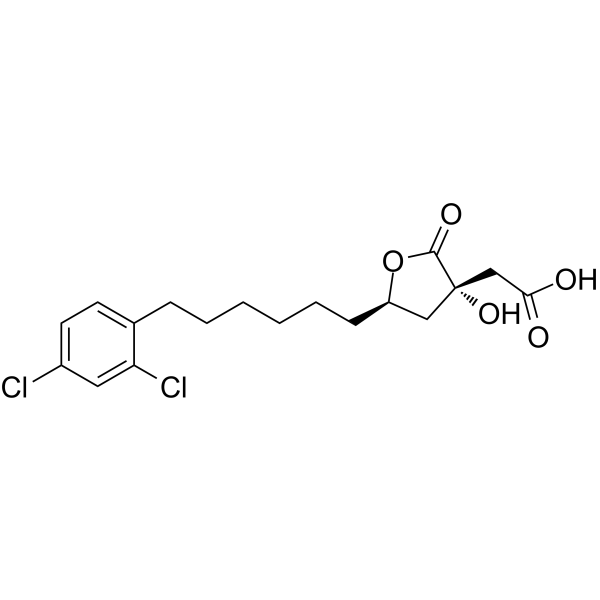 0 ImagesSB 204990 is a potent and specific inhibitor of ATP citrate lyase (ACLY) enzyme.
-
BMS-303141
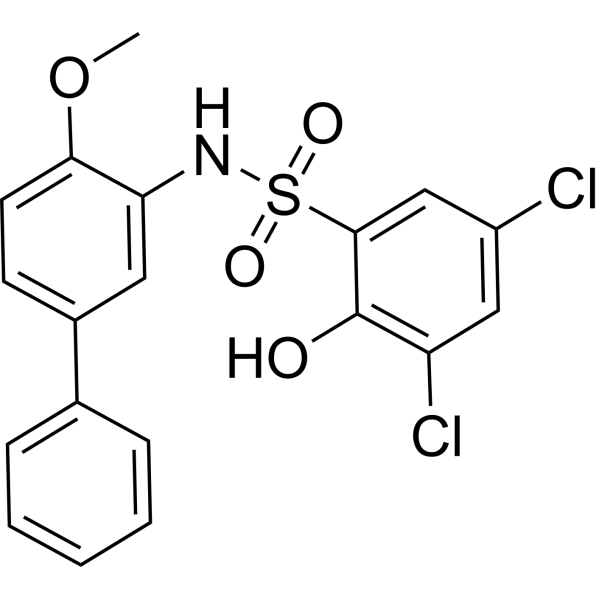 0 ImagesBMS-303141 is a potent, cell-permeable ATP-citrate lyase (ACL) inhibitor with an IC50 of 0.13 μM.
-
NDI-091143
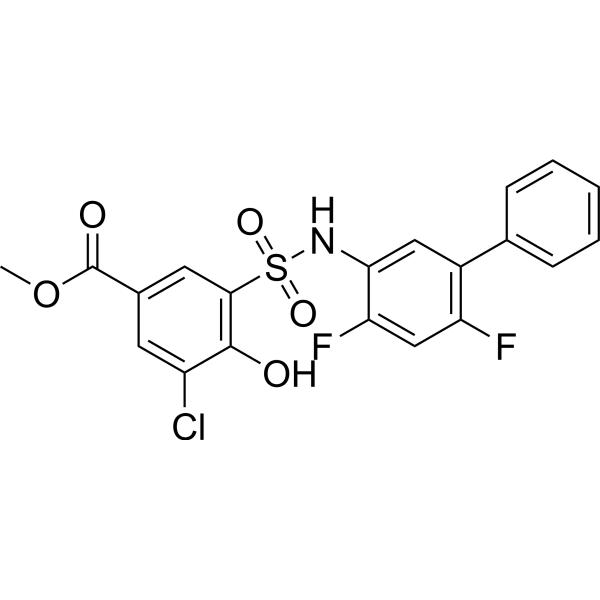 0 ImagesNDI-091143 is a potent and high-affinity human ATP-citrate lyase (ACLY) inhibitor with an IC50 of 2.1 nM (ADP-Glo assay), a Ki of 7.0 nM and a Kd of 2.2 nM. NDI-091143 inhibits ACLY catalysis allosterically, by stabilizing large conformational changes in the citrate domain that indirectly block the binding and recognition of citrate.
-
Hydroxycitric acid
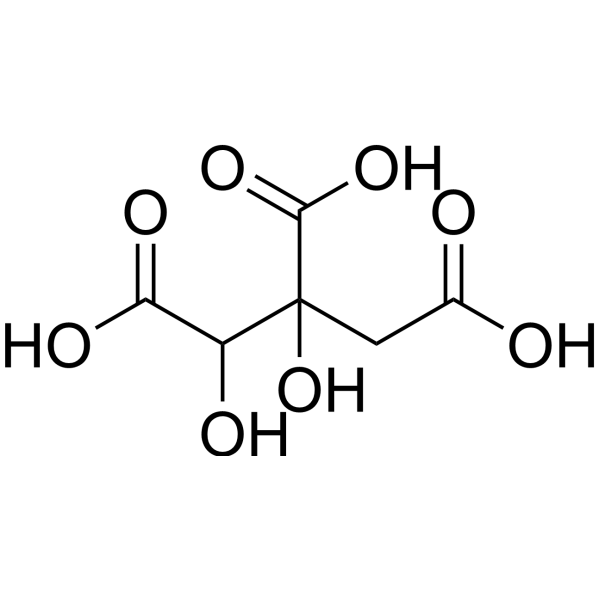 0 ImagesHydroxycitric acid is an orally active, multi-target, multi-bioactive organic acid. activates Nrf2 and its downstream molecule GPX4, increases glutathione levels, and thereby inhibits ferroptosis. Hydroxycitric acid activates the Nrf2/Keap1 and ACLY/NF-κB signaling pathways, upregulates the activities of antioxidant enzymes such as superoxide dismutase, reduces MDA content, thereby alleviating oxidative stress and renal tubular epithelial cell apoptosis, and improves pulmonary vascular and right ventricular remodeling. Hydroxycitric acid activates both the AMPK and mTORC1/S6K pathways, triggers the unfolded protein response, arrests the cancer cell cycle, and induces DNA fragmentation.
-
ESP15228
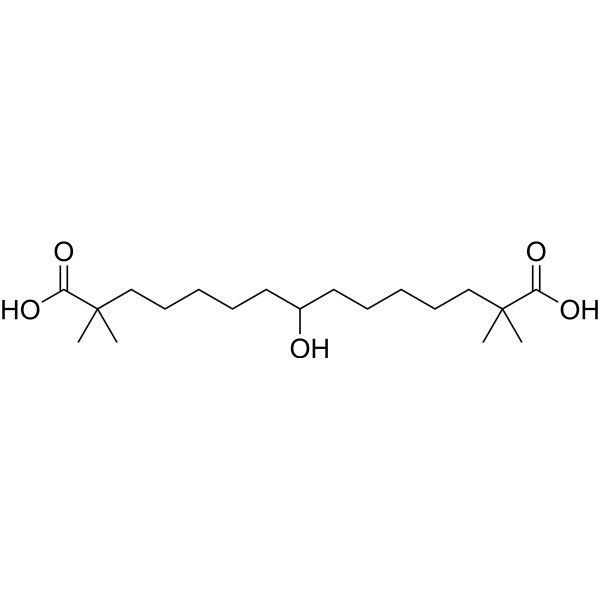
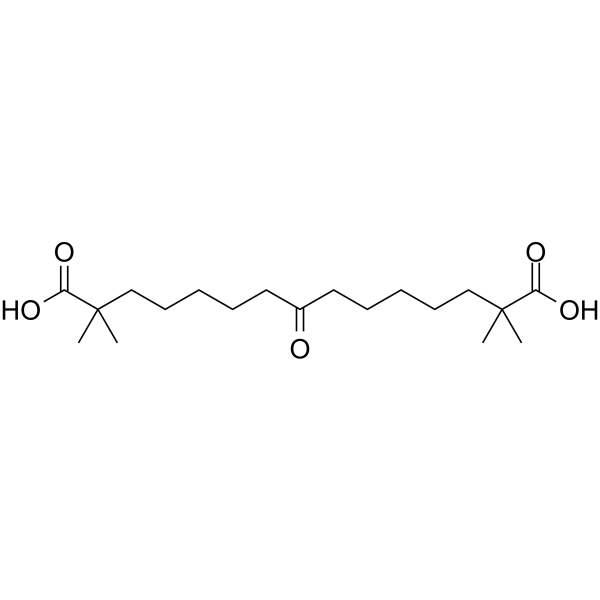 0 ImagesESP15228 is a metabolite of Bempedoic acid (HY-12357). ESP15228 undergoes glucuronidation to form ESP15228-glucuronide. ESP15228 can form excretory ESP15228-taurine conjugate in feces. ESP15228-CoA is a selective hepatic ATP citrate lyase inhibitor. ESP15228 can be used in the research of hypercholesterolemia.
-
MEDICA16 (Standard)
 0 ImagesCat. No.: HY-P1123RCAS No.: 87272-20-6MEDICA16 (Standard) is the analytical standard of MEDICA16 (HY-P1123). This product is intended for research and analytical applications. MEDICA16 is an orally active acetyl-CoA carboxylase and ATP-citrate lyase inhibitor. MEDICA16 limits the acetyl-CoA supply for acetyl-CoA carboxylase, inhibits acetyl-CoA carboxylase activity, exerts citrate-competitive inhibitory effects on ATP-citrate lyase, and reduces hepatic AMPK activity. MEDICA16 can be used in research related to insulin resistance, hyperlipidemia, and obesity.
-
ACLY-IN-3
 0 ImagesCat. No.: HY-182750ACLY-IN-3 is an ATP-citrate lyase (ACLY) inhibitor with an IC50 of 0.036 μM and a target Kd of 0.54 μM. ACLY-IN-3 interacts with the allosteric binding site of ACLY to inhibit its activity. ACLY-IN-3 exhibits excellent lipid-lowering effects and alleviates hepatic inflammation and liver fibrosis. ACLY-IN-3 can be used for the research of metabolic dysfunction-associated steatohepatitis.
-
2-Furoic acid
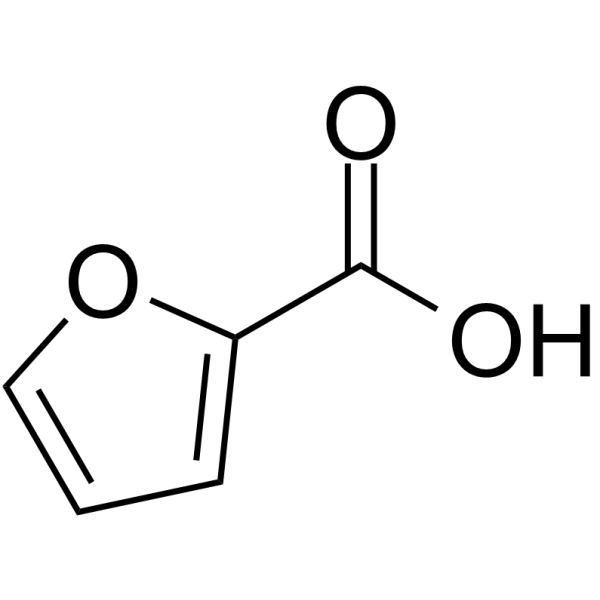 0 ImagesSynonyms: Pyromucic acid2-Furoic acid (Furan-2-carboxylic acid) is an organic compound produced through furfural oxidation. 2-Furoic acid exhibits hypolipidemic effet, lowers both serum cholesterol and serum triglyceride levels in rats.
-
EVT0185
 0 ImagesEVT0185 is an orally active ATP citrate lyase (ACLY) inhibitor. EVT0185 is converted to a CoA thioester in the liver by SLC27A2 and interacts with the CoA-binding site of ACLY. EVT0185-CoA inhibits ACLY activity with an IC50 of 2.5 μM. EVT0185 can phenocopy the immune and antitumour effects of genetic ACLY deletion. EVT0185 can increase tumour-infiltrating B cells and chemokine CXCL13 levels. EVT0185 can be used for the research of cancer, such as hepatocellular carcinoma (HCC).
-
Hydroxycitric acid tripotassium
 0 ImagesTripotassium hydroxycitrate is an orally active, multi-target, multi-bioactive organic acid. Tripotassium hydroxycitrate activates Nrf2 and its downstream molecule GPX4, increases glutathione levels, and thereby inhibits ferroptosis. Tripotassium hydroxycitrate activates the Nrf2/Keap1 and ACLY/NF-κB signaling pathways, upregulates the activities of antioxidant enzymes such as superoxide dismutase, reduces MDA content, thereby alleviating oxidative stress and renal tubular epithelial cell apoptosis, and improves pulmonary vascular and right ventricular remodeling. Tripotassium hydroxycitrate activates both the AMPK and mTORC1/S6K pathways, triggers the unfolded protein response, arrests the cancer cell cycle, and induces DNA fragmentation.
-
MEDICA16
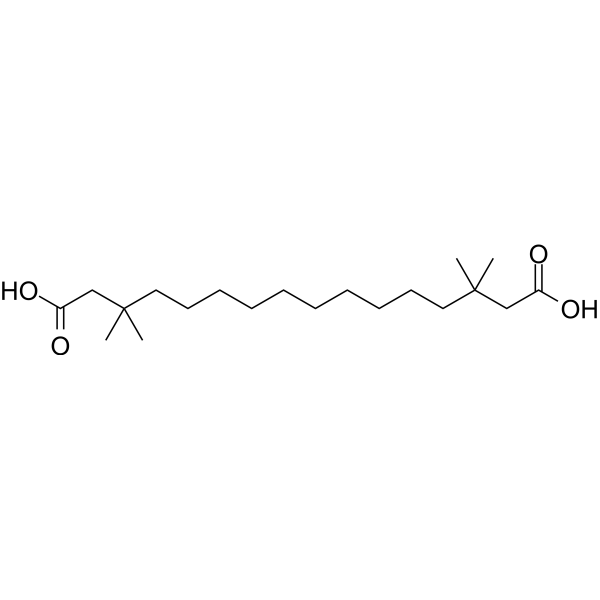 0 ImagesMEDICA16 is an orally active acetyl-CoA carboxylase and ATP-citrate lyase inhibitor. MEDICA16 limits the acetyl-CoA supply for acetyl-CoA carboxylase, inhibits acetyl-CoA carboxylase activity, exerts citrate-competitive inhibitory effects on ATP-citrate lyase, and reduces hepatic AMPK activity. MEDICA16 can be used in research related to insulin resistance, hyperlipidemia, and obesity.
-
(-)-Hydroxycitric acid lactone
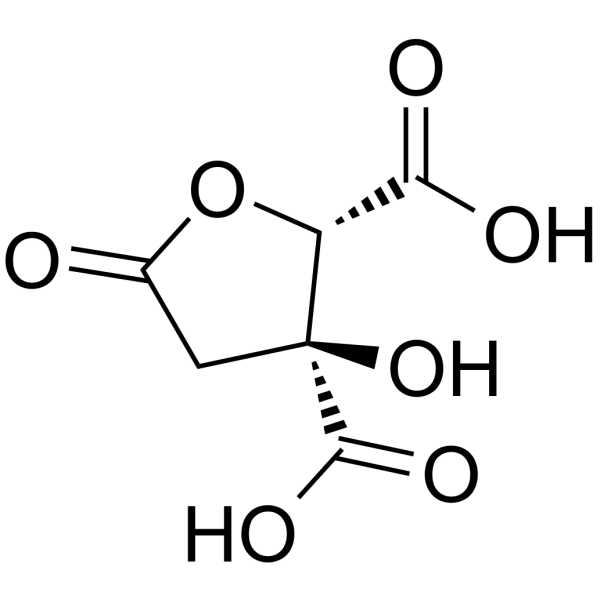 0 ImagesSynonyms: Garcinia lactone(-)-Hydroxycitric acid lactone (Garcinia lactone) is an anti-obesity agent and a popular weight loss food supplement. (-)-Hydroxycitric acid lactone is a potent inhibitor of ATP-citrate lyase. (-)-Hydroxycitric acid lactone catalyzes the extramitochondrial cleavage of citrate to oxaloacetate and acetyl-CoA, limits the availability of acetyl-CoA units required for fatty acid synthesis.
-
BGT-002
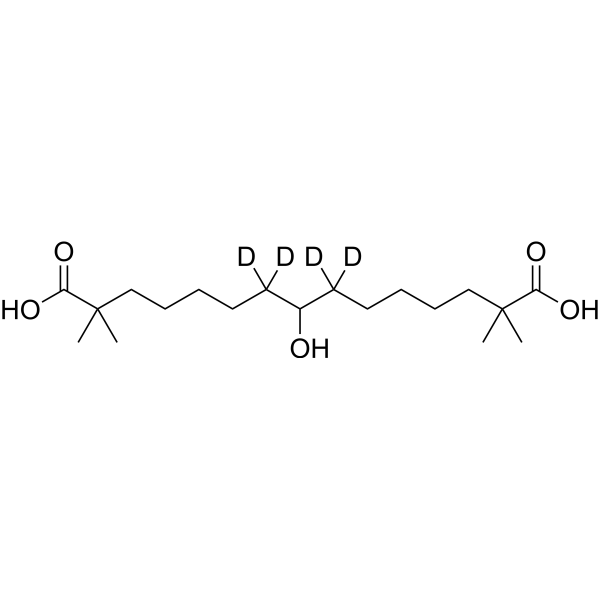
 0 ImagesSynonyms: 326EBGT-002 (326E) is an orally active dual ACLY inhibitor and PPARα agonist. BGT-002 reduces lipogenesis by inhibiting synthesis and promoting efflux. BGT-002 demonstrates efficacy in ameliorating metabolic dysfunction-associated steatohepatitis (MASH) and improving hyperlipidemia in vivo. BGT-002 can be used for hypercholesterolemia and MASH research.
-
2-Furoic acid-d3
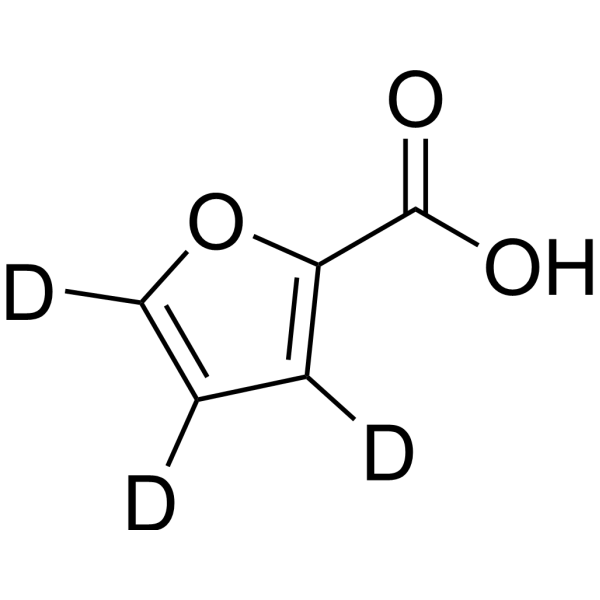 0 Images2-Furoic acid-d3 is the deuterium labeled 2-Furoic acid. 2-Furoic acid (Furan-2-carboxylic acid) is an organic compound produced through furfural oxidation. 2-Furoic acid exhibits hypolipidemic effet, lowers both serum cholesterol and serum triglyceride levels in rats.
-
ACLY-IN-1
 0 ImagesCat. No.: HY-172914CAS No.: 2897695-26-8ACLY-IN-1 is an orally active ACLY inhibitor. ACLY-IN-1 exhibits potent ACLY inhibitory activity (IC50 = 8.3 nM) and high binding affinity (KD = 72.0 nM) to ACLY. ACLY-IN-1 demonstrates good pharmacokinetic profiles and a potent in vivo hypolipidemic effect.
-
Bempedoic acid (Standard)
 0 ImagesSynonyms: ETC-1002 (Standard); ESP-55016 (Standard)Bempedoic acid (Standard) is the analytical standard of Bempedoic acid. This product is intended for research and analytical applications. Bempedoic acid (ETC-1002) is an ATP-citrate lyase (ACL) inhibitor. Bempedoic acid (ETC-1002) activates AMPK.
-
ACLY-IN-4
 0 ImagesCat. No.: HY-182751ACLY-IN-4 is an ATP-citrate lyase (ACLY) inhibitor with an IC50 of 0.022 μM and a Kd of 0.19 μM. ACLY-IN-4 binds to the allosteric binding site of ACLY. ACLY-IN-4 exhibits hypolipidemic, anti-steatotic, insulin sensitivity-improving, anti-oxidative stress, anti-inflammatory and anti-fibrotic activities. ACLY-IN-4 alleviates hepatic steatosis, systemic insulin resistance, oxidative stress, hepatic inflammation and fibrosis. ACLY-IN-4 can be used for the research of metabolic dysfunction-associated steatohepatitis.
-
ACLY-IN-2
 0 ImagesCat. No.: HY-177136CAS No.: 3009136-86-8ACLY-IN-2 (Compound 7) has inhibitory effect against human ATP citrate lyase (hACLY), with an IC50 of less than 1 nM. ACLY-IN-2 can be studied in research on liver-related diseases, type-2 diabetes, autoimmunity, and cancer.
- 1
- 2




